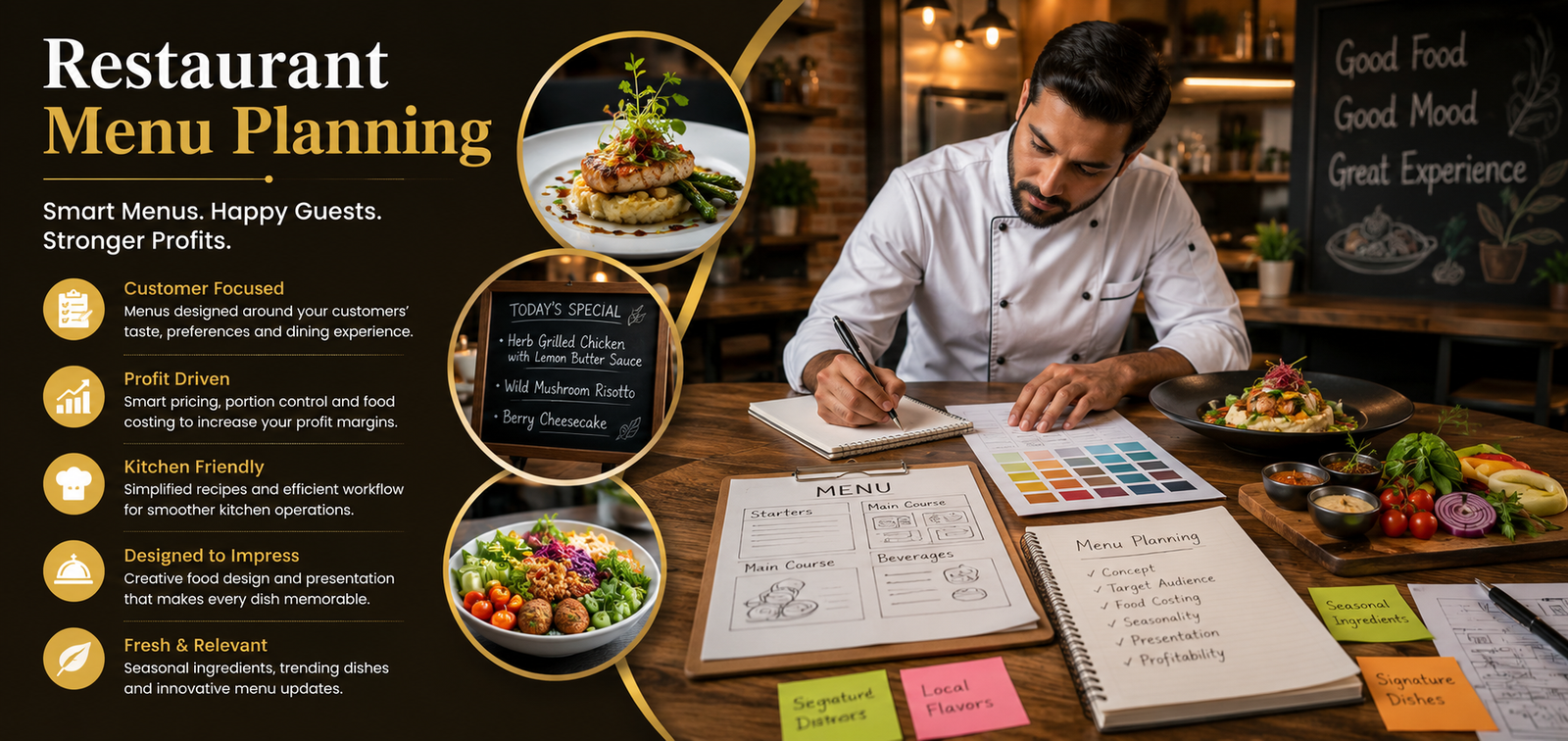
When people visit a restaurant, the menu is one of the first things they interact with. It does much more than list food items—it tells your story, reflects your brand, and influences what customers order.
Good restaurant menu planning is not about adding more dishes. It’s about creating the right balance between customer preferences, kitchen efficiency, food costs, and profitability.
Whether you’re opening a new restaurant, launching a café, operating a cloud kitchen, or refreshing an existing menu, thoughtful menu planning can have a direct impact on your business success.
What Is Restaurant Menu Planning?
Restaurant menu planning is the process of creating a menu that aligns with your restaurant concept, target customers, kitchen capabilities, and business goals.
A professionally planned menu considers:
- Customer preferences
- Cuisine selection
- Food costing
- Portion sizes
- Seasonal ingredients
- Kitchen workflow
- Pricing strategy
- Food presentation
- Profit margins
Instead of simply listing dishes, menu planning creates an experience that encourages customers to return again and again.
Why Restaurant Menu Planning Matters
Many restaurant owners believe that good food alone is enough to build a successful business.
In reality, even excellent chefs can struggle if the menu isn’t planned properly.
A well-designed menu helps you:
- Increase average order value
- Reduce food wastage
- Improve kitchen efficiency
- Maintain consistent quality
- Control inventory
- Simplify operations
- Build a stronger restaurant identity
- Improve customer satisfaction
Professional menu planning combines creativity with practical business strategy. SSA Hospitality’s approach includes menu development, recipe documentation, food costing, presentation, sourcing recommendations, and even crockery and packaging suggestions to create a complete dining experience.
Benefits of Professional Restaurant Menu Planning
1. Better Customer Experience
Customers appreciate menus that are easy to understand and offer the right variety without being overwhelming.
A thoughtfully planned menu:
- Makes ordering easier
- Highlights signature dishes
- Offers balanced choices
- Improves overall dining satisfaction
When customers enjoy the experience, they’re more likely to return and recommend your restaurant.
2. Higher Profitability
Not every popular dish is profitable.
Professional menu planning evaluates:
- Ingredient costs
- Preparation time
- Selling price
- Demand
- Portion control
This allows restaurants to maximize profits while still providing value to customers.
3. Reduced Food Waste
Food waste directly affects restaurant profits.
Proper menu planning helps by:
- Using ingredients across multiple dishes
- Planning seasonal menus
- Managing inventory efficiently
- Reducing unnecessary stock
Smarter ingredient planning leads to lower operating costs.
4. Faster Kitchen Operations
An overcrowded menu often slows down service.
A well-structured menu helps kitchens:
- Prepare food efficiently
- Reduce waiting time
- Improve coordination
- Maintain consistent quality
Customers notice faster service—and that improves reviews and repeat visits.
5. Stronger Restaurant Identity
Every restaurant should have its own personality.
Your menu should reflect:
- Your cuisine
- Your target audience
- Your service style
- Your dining experience
Whether you run a premium restaurant, family dining space, café, QSR, or cloud kitchen, the menu should clearly communicate what makes your business unique.
Restaurant Menu Planning for Different Types of Businesses
Every hospitality business has different requirements.
Professional menu planning can be tailored for:
- Restaurants
- Cafés
- Cloud Kitchens
- Hotels
- Resorts
- Fine Dining Restaurants
- Quick Service Restaurants (QSR)
- Food Courts
- Banquet Operations
- Catering Businesses
Each format requires a different approach to pricing, food preparation, menu size, and customer experience.
Why Work with Experienced Menu Planning Professionals?
Creating a successful restaurant menu requires more than culinary skills.
It demands an understanding of:
- Restaurant operations
- Customer behaviour
- Food costing
- Kitchen workflow
- Market trends
- Brand positioning
SSA Hospitality combines experienced chefs, food designers, and hospitality professionals to create customised menus for different cuisines, along with recipe documentation, vendor guidance, HACCP suggestions, and presentation planning.
Final Thoughts
A restaurant menu is much more than a list of dishes—it’s one of your most powerful business tools.
The right menu can improve customer experience, simplify kitchen operations, reduce unnecessary costs, and increase profitability. Whether you’re starting a new restaurant or looking to improve an existing one, investing time in professional restaurant menu planning can make a lasting difference.
A carefully planned menu helps your restaurant stand out in a competitive market while giving customers a reason to return again and again.