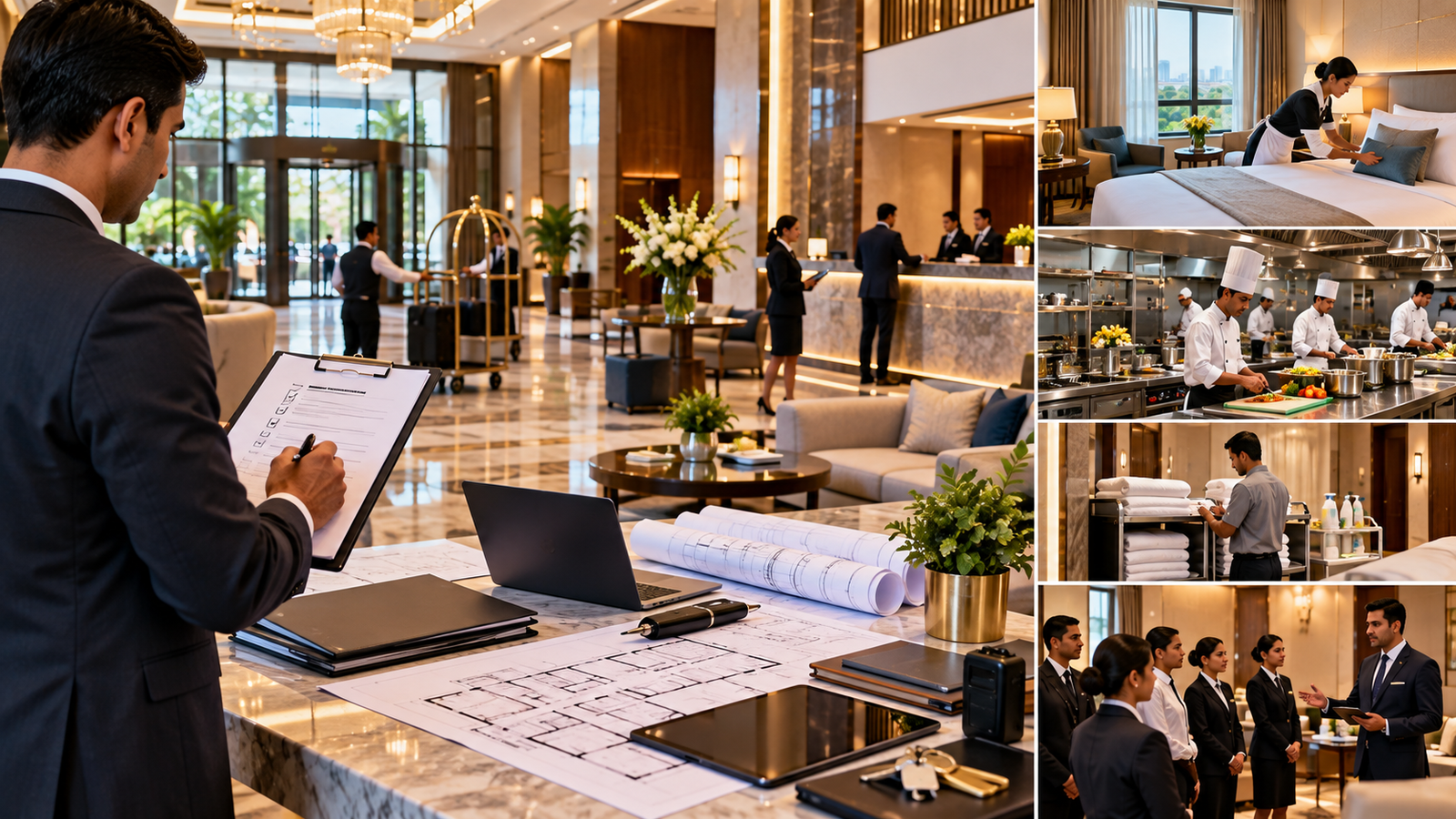
Opening a new hotel involves far more than completing construction and welcoming the first guest. Before opening day, dozens of operational, financial, staffing, guest experience, and marketing decisions need to be completed.
A structured hotel pre-opening checklist helps owners and management teams identify important tasks before the property starts accepting guests.
The objective is simple: make sure the hotel is not only physically ready, but also operationally prepared.
1. Finalize the Hotel Concept
Before opening, the hotel should have a clear identity.
Define the target guest, positioning, service level, room categories, food and beverage offerings, and overall guest experience.
A clear concept helps guide operational and marketing decisions throughout the property.
2. Complete Operational Planning
Every department should understand how the hotel will operate.
This includes front office, housekeeping, food and beverage, maintenance, security, finance, sales, and administration.
Clear responsibilities reduce confusion once the property becomes operational.
3. Develop Standard Operating Procedures
Standard Operating Procedures, commonly known as SOPs, help employees understand how important tasks should be performed.
SOPs should cover areas such as:
- Guest check-in and check-out
- Housekeeping
- Room inspection
- Food service
- Complaint handling
- Safety procedures
- Inventory control
- Cash handling
- Maintenance reporting
Well-defined procedures support consistency across departments.
4. Recruit and Train Employees
A hotel cannot deliver a strong guest experience without a properly trained team.
Recruitment should begin early enough to allow employees to understand the property, systems, service standards, responsibilities, and operating procedures before launch.
Training should include both technical responsibilities and guest communication.
5. Test the Hotel’s Technology
Technology plays an important role in modern hotel operations.
Before launch, management should test reservation systems, property management systems, point-of-sale systems, payment processes, communication systems, Wi-Fi, security systems, and other technology used by staff and guests.
6. Prepare the Rooms
Every room should be inspected before opening.
Check furniture, lighting, electrical points, plumbing, air conditioning, bathroom fixtures, linens, amenities, safety equipment, and overall presentation.
7. Prepare Food and Beverage Operations
If the hotel includes restaurants, cafés, bars, room service, or banquet facilities, these operations should be tested before opening.
Menus, recipes, kitchen workflows, equipment, storage, service procedures, supplier arrangements, and staff responsibilities should all be reviewed.
8. Review Kitchen and Back-of-House Operations
The kitchen is one of the most important operational areas of a hotel.
Before launch, verify equipment, storage, refrigeration, preparation areas, dishwashing, waste handling, staff movement, and workflow.
9. Establish Vendor and Inventory Systems
Hotels depend on reliable suppliers for food, beverages, housekeeping supplies, amenities, maintenance materials, and other products.
Before opening, supplier relationships, purchasing procedures, delivery schedules, inventory levels, and storage systems should be established.
10. Create the Guest Experience Journey
Think through the guest journey from beginning to end.
What happens when a guest discovers the hotel? How do they make a reservation? What happens at arrival? How are requests handled? What happens during check-out?
Reviewing the complete guest journey can reveal gaps that individual departments may not notice.
11. Prepare Sales and Marketing
A new hotel needs visibility before opening.
The marketing plan may include the website, online travel platforms, social media, local partnerships, corporate sales, promotional campaigns, photography, and other channels relevant to the target audience.
12. Conduct a Final Pre-Opening Audit
Before opening, conduct a complete operational review.
Check rooms, public areas, kitchen operations, staff readiness, technology, inventory, safety, guest communication, marketing, financial processes, and emergency procedures.
Why Hotel Pre-Opening Planning Matters
The first impression of a new hotel can influence guest reviews, reputation, repeat bookings, and future business.
Opening before the team and systems are ready can create unnecessary operational pressure.
A detailed hotel pre-opening checklist helps owners and management teams move from construction completion to operational readiness in a structured way.
Professional hospitality consultants can provide valuable support during this stage by helping with concept planning, operational setup, kitchen planning, menu development, staff preparation, SOPs, and other pre-opening requirements.
A successful hotel opening is not simply about opening the doors on a particular date. It is about making sure the property, people, systems, and guest experience are ready to perform from day one.